From top to bottom, the reality of neurological care for people with Huntington’s Disease in Venezuela and the delivery of therapeutic advancement
A story by Alex Fisher
“……as the heat is turned up on HD science and the current US administration have also turned up the heat in the region, we need to have a greater sense of what we are up against if we want to ‘get this to Venezuela’”.
La Luz Caregivers Team in Barranquitas is a project formed by Factor-H and Habitat Luz from Maracaibo, to support the most vulnerable Huntington’s Disease families and (informal) caregivers in the town with practical, medical and emotional support. Barranquitas is a small town located on the Western shore of lake Maracaibo in Venezuela, a town that played a historical role in the discovery of the mutation that causes the disease. An approximately 20-30% of the people of this town of roughly 6,000 inhabitants is at risk to develop HD.
This is just one of a series of reflections by Team Lead Alex Fisher in the wake of her latest visit and the recent news about the therapeutic advancement presented to investors about the Uniqure gene therapy trial results targeting the HTT gene. It has also been updated in the light of the events in Venezuela on the 3rd January (2026)
Enjoy the reading!
nacho
In late September 2025, a tsunami of science reached the shores of the Huntington’s Disease (HD) community.
The shock waves continue. As an HD clinician, I’m hearing how non-specialist practitioners have told advanced patients that there’s a “cure” and so they don’t see a reason to engage in anything which will further their comfort. I’m hearing about those without overt symptoms pleading with services to have the neurosurgery required to deliver this therapy now.
This article is not about science miscommunication, although I feel there are many questions that require answers.
No, this article is about another conversation, the talk about the economies of treatment and equitable access to innovative therapies. Amongst the discussions and many statements, I’ve listened to, one has been ‘of course we will get this to Venezuela’. This rhetoric stopped me in my tracks, probably more so than some of the scientific claims we have all listened to in major news channels.
Nancy Wexler, who led a large team of clinicians and scientists to identify the mutation that causes HD, once stated that if there were any positive developments, the communities of Venezuela she studied would be the first to receive the treatment. What you might not know that at the time she and fellow scientists carried out their field trips to Zulia State, beginning in the early 1980s until 2002, when the research project ended, and when Venezuela was becoming a very different place. In the early 2000s, Hugo Chavez came to power and Venezuela’s economy was tipped on its head. The political elite became averse to any outside intervention and that continues to this day. As I understand it, Nancy tried to engage with the Chavez government, but he would not see her and so the Venezuelan kindred took a back seat. Nancy was not allowed to return beginning in the mid 2000s. Now, as the heat is turned up on HD science and the current US administration have also turned up the heat in the region, we need to have a greater sense of what we are up against if we want to ‘get this to Venezuela’.
And so, by way of illustration, I’m going to start at the bottom – literally.
Before I became an Occupational Therapist (OT), the only time I really thought about what I was sitting on was when I became uncomfortable. I was lucky – I had a choice to move, to get another chair.
Now as I’m asking my colleagues in the European Huntington’s Disease Network (EHDN) OT Group to update our “Seating Tips for people with HD”, my mind is drawn once again to the importance of seating and the fact that having access to adequate seating is important for the quality of life of patients everywhere.
Take a moment to reflect on this simple act. Where are you sitting as you read this? What difference does it make to you? What difference does it make to others? In delivering care – seating is a Team pursuit.
In the UK, we have systems which usually allow us to prescribe suitable seating for people with HD. I’m aware that in other European countries, it’s a mix of insurance and state systems. I’m also aware that there are many countries where this might not be the case.
Let me take you to a place where this issue is brought into stark contrast. Barranquitas, Venezuela. It’s the home to one of the biggest populations of people with HD in the world.
Here, for many HD families, the choice is between seating and eating.
The socioeconomic consequences of having a genetic disorder in the family mean that employment is often lost before many of us have to consider retiring. The financial hardships drift from generation to generation. In Barranquitas, this is compounded by the country’s long-term geopolitical crisis and the narrow range of precarious opportunities available in the town, where most families live from fishing blue crabs in the lake.
This past August, I again travelled to meet with our La Luz Caregivers (“Cuidadores”) Team to review the patient case load and develop some of the strands of the programme further.
Pressure care and nutritional assessment are an essential part of this.
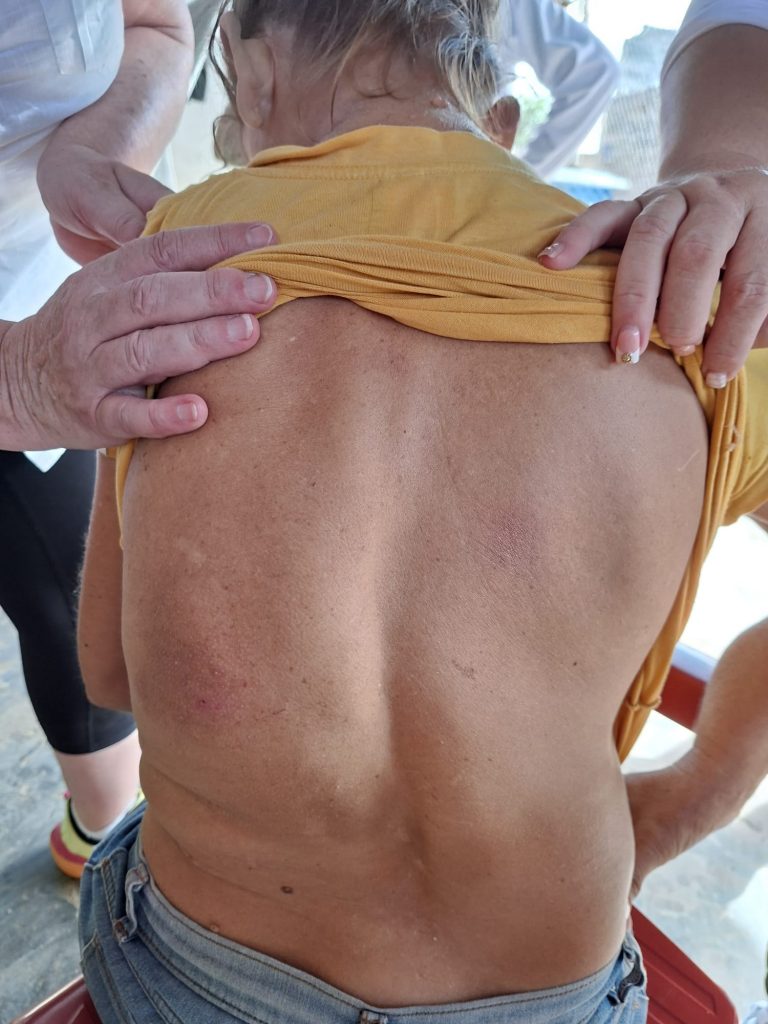
People outside of HD care may not automatically think about these issues, but skin trauma due to chorea or poor coordination is common as is the unintentional weight loss that occurs during the disease. The latter often stems from a complex interaction of innate metabolic changes, in addition to an inability to feed oneself, due to difficulties swallowing and to neurological apathy, leading patients to not take on board enough calories. Fatigue is common as is altered tone in the abdomen, leading to problems with posture and balance, with sitting becoming problematic. I have only scratched the surface, but these areas are intimately connected.
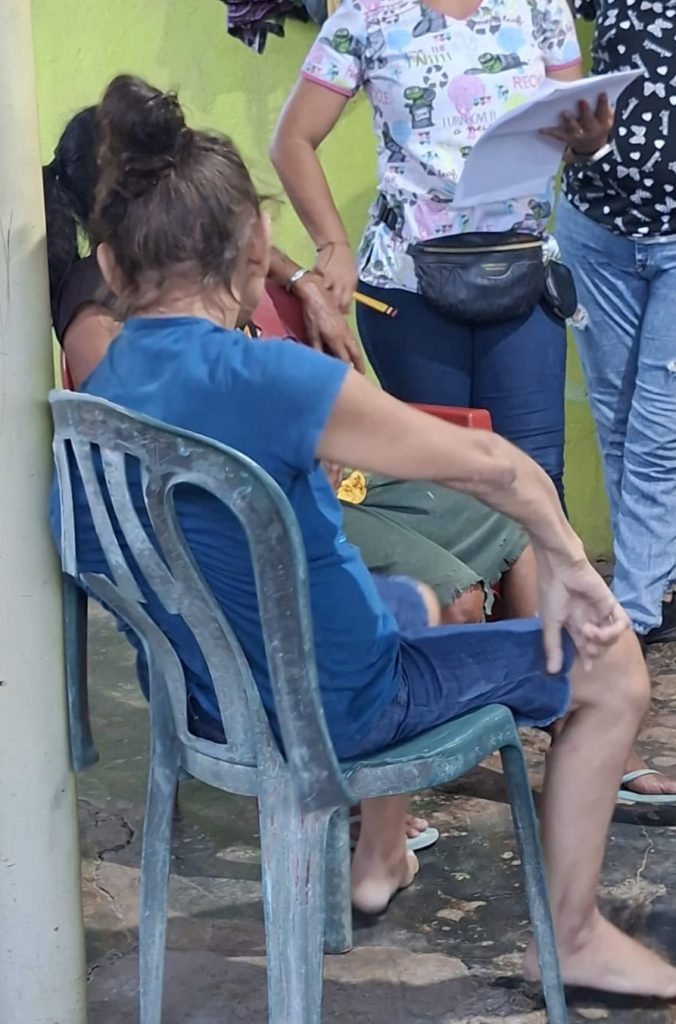
Invariably on our visits, the person with HD would be poised in a hammock, on a plastic garden chair or, if they have one, a bed. Beds and hammocks and what they mean are for another article although ordinarily, I wouldn’t separate them.
But why seating or eating?
I was forever amazed at items I heard or saw being exchanged in Barranquitas. And of course, a seat can be exchanged or sold for food. It is hard to explain the immense difficulties families face to care for their affected relatives.
From October through to January, there’s a shutdown period for fishing in Lake Maracaibo, upon which most of the employment in the town is centred, so money is lacking and therefore food becomes harder to procure.
In the ‘best’ of times, an HD family’s house is spartan. When the Team visits, we are offered chairs to sit on as a welcoming gesture. There are no spares. I can hear the thoughts from readers – “well, we don’t have many spare chairs in our home”. Visiting a home with a concrete floor and tin roof or tin surrounds and an earth floor with no furniture is altogether different. One of the La Luz Team members, Mariebella, remembers growing up with her Mum who had HD. Her Dad had left and she, acting as the main breadwinner at 12 years of age, had to sell anything they had left in order to eat.
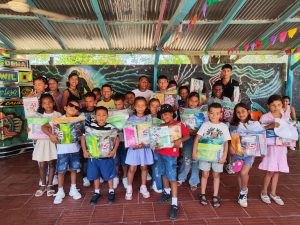
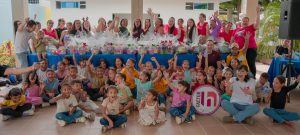
Currently, at least one third of the people with HD that the Team sees have mid-arm circumference measurements that indicate malnutrition. And this is only a tiny fraction of the town’s people, many of whom may eat only once a day. At our most recent field clinic, all the children who came with a parent who has HD were determined to have malnutrition. There are currently 400 children under the age of 13 registered with our children’s Abrazos (‘Hugs’) programme. That’s 400 children at risk of HD as one or both of their parents have HD.
I’ll return to food in a moment, but my starting point was chairs.
Purchasing chairs in Venezuela is an art. To understand why is to understand the long-term effects of the political decisions made at the turn of this century and its hyperinflationary effects on the economy. Combined with what is a severe socialist and anti-imperialist policy, this results in a reduced ability to bring anything into the country. In practice, this means materials are rare and expensive and explains why the standard chair in most Barranquinteros’ houses belong to the plastic garden type.
Plastic garden chairs and skinny bodies don’t mix.
One of our patients has severe scoliosis. Her garden chair is split to the rear and as she moves, it pinches and rubs an area of her already thin skin.
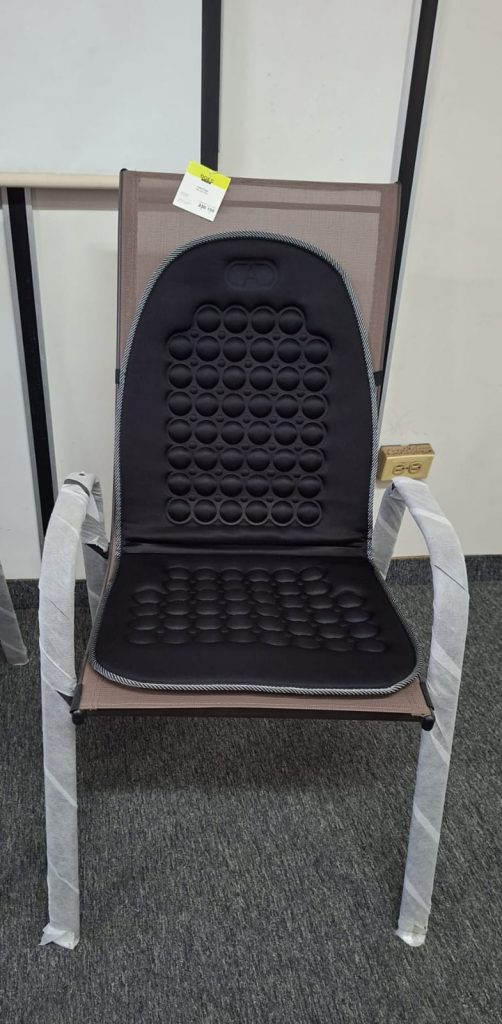
A trip around a hardware type store in Maracaibo (the nearest city to Barranquitas, about 3-4 hours away via a dusty road filled with potholes that usually floods) led us to finding a $45 dollar chair with supportive arms and a flexible material back and base. We also found a car seat cover with some air pockets which would act to provide additional pressure relief in the bargain bucket for $8 dollars. Here in the UK, it would probably cost half that but consider it will save us treating the skin abrasions of our scoliosis patient, then it adds significant clinical value. Previous equipment has gone missing from her family home but so far, the regular visits from our Team have enabled us to keep the chair in situ.
Let me return to food.
If you have a clinical diagnosis of HD in Barranquitas (as there is no genetic testing here), then you will be registered with the Factor H/Habitat Luz activities. This includes a food parcel at the quarterly field clinics, where a large team of volunteers and clinicians treat patients and children. The food provision (grains, nutritional supplements, oil, milk) goes someway to alleviate the deficit in family or state provision. However, often the malnutrition is chronic. In 2003, anaemia was already common in children in Venezuela to the extent that flour was being fortified. Now, in 2026, many of our patients have chronic anaemia. Don’t forget HD is not just a brain disease, it’s a systems disease. Gastrointestinal disorders are common. In the last few months, we’ve had 3 patients for whom this is an issue. For one, we funded hospital admission in a nearby town so one of our patients could receive blood transfusions. For her daughter to stay with her, we funded their food for the stay too. Now having returned home, that problem has not gone away. In fact, our friend is returned to the same situation. A temporary solution to a chronic problem.
On the same night she was discharged, our Team GP Mileidy (who also delivers care alongside of Maribella and our Nurse Vanesa) visited the patient. The family shrugged that all they could offer her was a cup of rice and vegetables.
Taking this all into account and with limited resources for the project, amongst the many tough decisions we must make in our weekly Team meetings – there’s debate about the provision of chairs, which might reduce the risk of injury and skin sores versus the provision of food. We watch every cent.
The forecast for the delivery of our programs across Latin America is approximately $300,000 per year for 2023-2025. Contrary to belief, we are not funded through public systems or most of the drug companies, so fundraising is a constant battle. Our successful bid for the Caregivers project to the Amgen prize in 2024 gives us the ability to employ the Team for approximately 5 years and hopefully build a hub for them in the town. It also enabled us to purchase equipment. For the most vulnerable of patients, we’re now purchasing and cooking what can only be described as ‘palliative’ meals. It’s our version of food fortification & food supplementation as bottled supplements are expensive and even harder to come by. It’s an ethical minefield as we cannot be seen to be favouring one family over another here. Our pillars are humanitarian and that means abiding by equity.
The HD Community in Barranquitas (and San Luis) were the starting point for the recent tsunami of science.
Dr Avila-Giron, a psychiatrist and a student of Américo Negrete, the neurologist who in the 1950s was the first to recognise HD in the area, called the support the people needed ‘social medicine’. In the same way, science and care are not separate endeavours. Care is where treatment is often coordinated and delivered. Studying care gives us a sense of the economies of treatment. To truly build a pathway towards treatment here, we must understand where to start & that is by caring for this community. Sensitively navigating former and now new political barriers is not going to be easy but Factor-H can guide that over time with our knowledge of this space.
Dismantling whether to seat or eat is something we can all begin to address & we can start right now.
If you want to donate, please get in touch.
Every dollar, euro, or pound counts and will be used in tangible ways whether its food, equipment, staff wages, medication. All the money goes to Latin America. Despite recent events, conditions will not change immediately and may become worse so our need to support families will have to strengthen. Hyperinflation was forecast to reach 500% this year before the recent events and without stability may become greater. You can donate through our Factor-H website and will be prompted to choose an area which matches your interests.
Many thanks to recent donors from the European Huntington’s Disease Association (EHA) and Jacqui Harrison (a long time HD Advocate and founder of #sybilontour).

 English
  Español
  Português do Brasil