
On January 3rd, 2026, at 7 am (UK time), my “Hermanito” Gindel rang me. ‘They’re bombing Caracas’ he said, ‘don’t worry, I love you, I’m safe’, ‘I’ll call you later’.
A call like that leaves you in a state of anxiety. Fear of the unknown. And I’m not living there.
Gindel, like all our Habitat Luz and Venezuelan colleagues live in state of unknown. It has become normalised. It is not normal. Now it’s even more unknown.
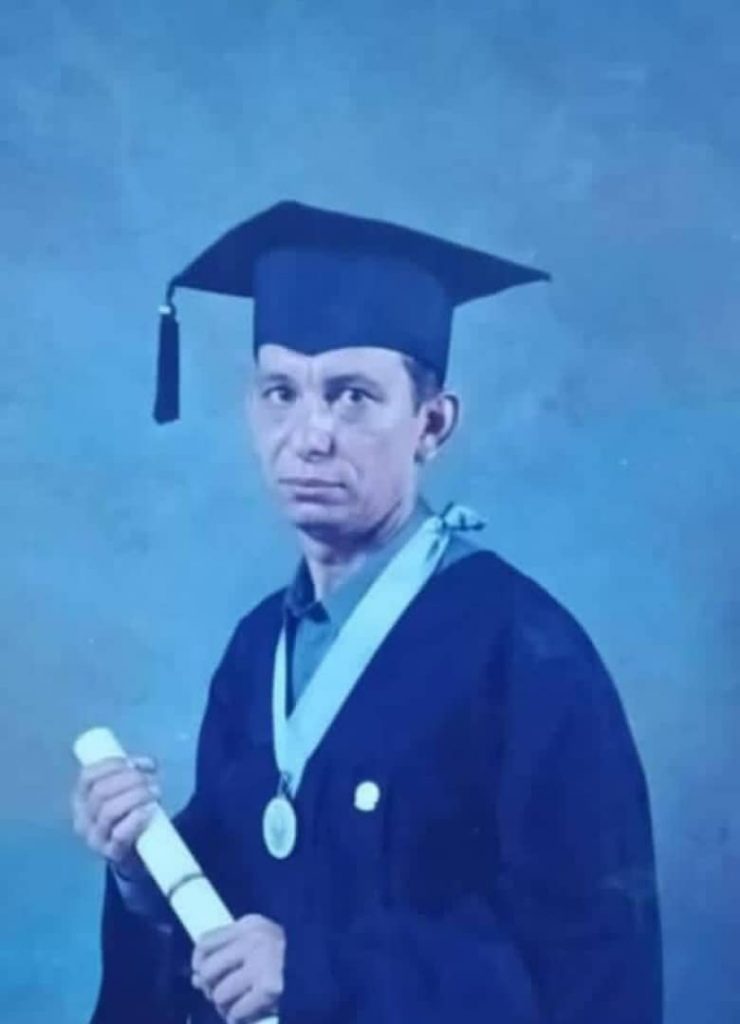
A few days later, on January 7th, a quieter event happened in Barranquitas. Señor Hendy dies.
Why am I telling you about Hendy?
Because he represents, like so many people with Huntington’s Disease in this town, alongside their family members and caregivers, a fierce resilience but also a great sadness. Not only the ongoing grief for their country, but also the DNA limbo which flows through their veins. I also think that despite being thousands of miles away from the global HD community, he was and his sister Aracelis is, kindred spirits to everyone.
The global HD community know ambiguity, they live it. So, it’s important to mark his death with who he was but also how his unaffected sister cared for him and still cares for his two affected brothers. This is a story of love and caregiving.
Hendy had long legs. I remember the first time I saw him. They were crossed at the knees and no matter what anyone did, when he was sitting, he was going to sit that way. It wasn’t a contracture. His legs had a small amount of spasticity, but he could move them, it’s just that they kept returning to that position. No this was Hendy – the man. Hendy – the schoolteacher, who as my colleagues whom he taught remembered him. Sitting in the classroom, cigarette in hand, long legs crossed. The poise remained.
In Venezuela, when you are a teacher, you are called maestro or “profe”. It is a mark of respect and our team colleagues continued to refer to him as such.
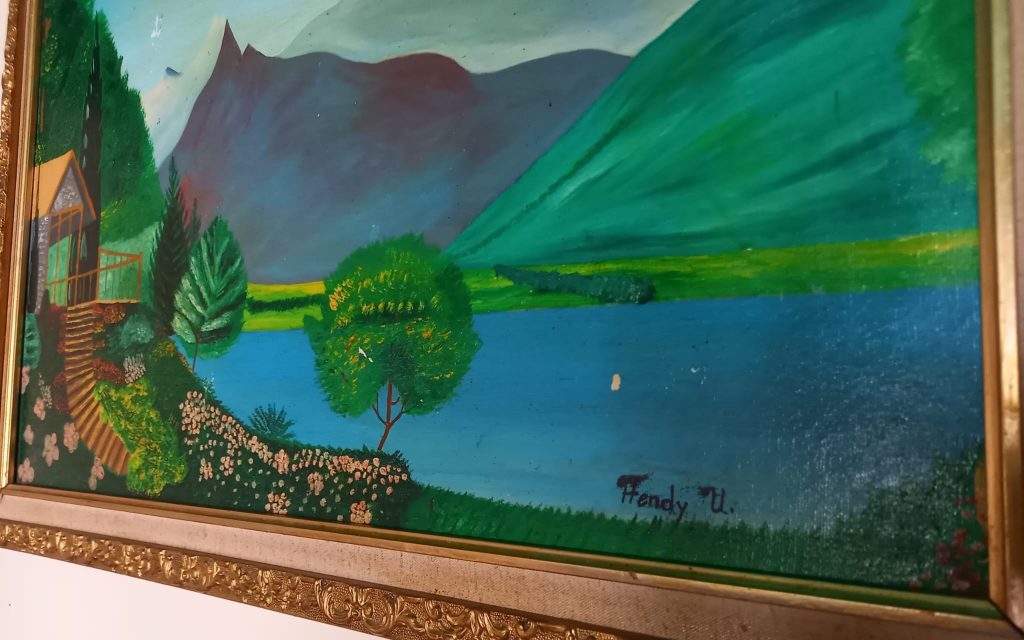
On the wall in the house which Aracelis -his sister- immaculately maintained, was a painting by Hendy. An acrylic landscape of bright green mountains running down to a deep blue lake. Now you have a picture of him, long legged – cigarette in one hand and paintbrush in the other. Painting and travelling is what what he did in his spare time and in an era before the geopolitical crisis of the country took hold. It was also a time for Hendy before HD took hold.
Aracelis sits on her porch with Gindel and I.
It’s the height of August so Hendy is inside the cool of the house now unable to sit and so stretched out on a makeshift beach chair, she tells us quietly of his change. She does not want him to hear and upset him.
Still working as a teacher, Hendy’s personality started to shift. He could hold it together in the routine of the classroom but was less tolerant of the noise the students made and was quick to anger. At home – the difference was more marked.
Many families here live together, pooling monies and shelter but these actions are also typical of the collective nature of Latin American society. Hendy developed some irrational thoughts about Aracelis to the extent he kept repeating that he wanted to kill her. Initially Aracelis was able to distract him or walk away and minimize any trigger which she thought had started his threats. However, the thought was stuck and ultimately when Hendy came home, and Aracelis was on her own, she would hide in the cupboard as by this time he’d found a knife.
There is no psychiatric facility in Barranquitas and as I’ve written previously any state care has become extremely fragile, so any actions often must be family led.
There are those that might have abandoned Hendy but Aracelis decided that Hendy needed care. Managing to persuade Hendy, she and her husband took him to Maracaibo where he was seen at a private hospital and signed into their care for 3 years. The family paid for his care and diligently she travelled the 4 hours each way every week to see him.
Aracelis talks at length about the guilt she felt at her actions. She talked that how before Hendy she thought HD was only movement but now knows it is not. She’s prepared for one of her surviving brothers to be like him as he is also struggling with his cognitive rigidity, stuck thoughts and little movement (like Hendy).
After 3 years Hendy was safe enough to return. The crescendo seemed to be over.
Always a quiet, contemplative man, the disease took his remaining communication, but he would still sit long legs crossed on his red plastic garden chair in the living room looking as though he were still lecturing until he could no longer support himself. His weight and muscle loss no longer able to hold him up.
Aracelis tended to him lovingly and latterly Hendy was supported by the La Luz Caregivers Team. He died peacefully following several prolonged episodes of pneumonia. Being on our caseload means that we were able to source and pay for his drugs as well as to contribute to his incontinence products. Dr. Mileidy (our Team’s GP) tended to his care throughout with the help of local clinic staff where she and our Nurse Vanesa also work.
Aracelis, when she can, continues to attend the Caregivers group set up through the La Luz programme. Her presence is comforting and her experience, everything; she was one of the first to whom we turned to when our team members needed to learn how to undertake assessments. Hendy’s surviving brothers are still mobile, and she will tend to them. She hopes the disease dies with them as they have no children. She is tired but her faith and her belief in service will help her through the continuing ambiguous loss of her country and that which HD brings.
Love that is brave is not always loud.

 English
  Español
  Português do Brasil